If you've had more than one plumbing leak in the past couple of years, in different parts of the house, it's worth asking a different question than the one most homeowners start with. Most people start by asking how to fix this specific leak. The better question is why the leaks keep happening at all.
In a lot of older homes, especially ones still running original galvanized steel supply lines, the answer is that the pipe material itself has started failing, and a new leak showing up somewhere else next year is not bad luck. It's the same underlying problem.
The Pattern That Actually Matters
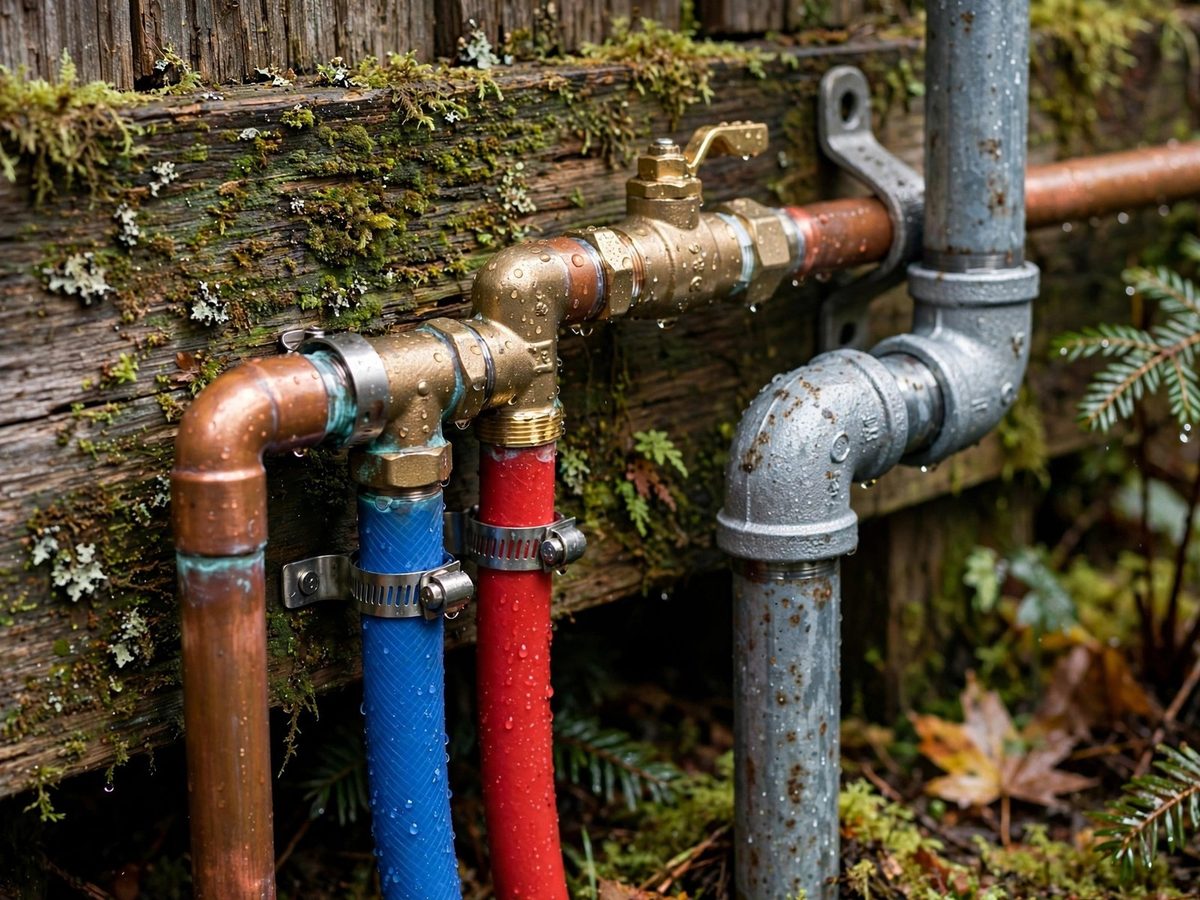
Galvanized steel pipe corrodes from the inside out over roughly 40 to 60 years. The corrosion doesn't happen evenly, so it shows up as a pinhole leak in one spot, gets patched, and then shows up somewhere else a few months or a year later. If that sounds familiar, the pattern itself is the diagnosis. A single repair fixes a single spot. It does nothing for the rest of the pipe run that's corroding at roughly the same rate.
This is a genuinely common situation in older neighborhoods around King County. It comes up often enough on our SeaTac service calls specifically that we treat a second unrelated leak in an older SeaTac home as a real signal to check the whole system, not just patch the new spot and move on.
What To Actually Look For
Brown Or Rusty Water
From more than one fixture, not just one, suggesting internal corrosion in the supply lines themselves.
A Second Unrelated Leak
Within a year or two of the first, in a different part of the house.
Low Pressure Everywhere
Not just at one fixture, since corrosion narrows the inside diameter of the pipe over its full length.
Visible Corrosion
Flaking or rust-colored buildup on any exposed pipe section in a basement or crawlspace.
Repair Or Repipe: How To Actually Decide
Not every leak means you need a full repipe, and a reputable plumber should tell you that plainly. A single leak in an otherwise sound copper or PEX system is usually just a repair. The calculus changes when the pipe material itself is the failure point, which is a real, common issue with a whole-home repipe being the fix that actually addresses the cause instead of the latest symptom.
If you're not sure which situation you're in, a hidden leak is sometimes part of the picture too, especially one you can't see directly. A water bill that's climbed without explanation, or the sound of running water when everything's off, points to a leak that hasn't shown itself yet.
Leak detection with acoustic and thermal equipment finds it before it becomes visible damage, and it's often the step that clarifies whether you're dealing with one bad section of pipe or a system-wide problem.
What A Repipe Actually Involves
A real repipe assessment starts with checking accessible pipe sections and testing pressure at several fixtures, not just quoting a number over the phone. Most homes in this region are good candidates for PEX, which resists the corrosion that fails galvanized steel completely and handles minor freezing better than rigid copper.
Any repipe work follows the Uniform Plumbing Code (UPC) that Washington has adopted statewide. The job is disruptive, typically a few days, but it's scheduled in sections so the household keeps water access through most of it.
The honest version of this advice is that a repipe is a bigger job and a bigger cost than another patch repair, and it's not the right call for every leak.
But if you've genuinely had more than one unrelated leak, or your water pressure has dropped across the whole house, it's worth having someone look at the actual cause. Paying for a third patch on a pipe system that's already told you what it's going to do next rarely saves money in the end.
How Long It Actually Takes, And What Drives The Cost
Most whole-home repipes for a typical single-family house take between two and four working days, depending on the home's size, how many fixtures it has, and how accessible the existing pipe runs are. A home with an open crawlspace or unfinished basement goes faster than one where walls need to be opened to reach the pipe. Multi-story homes with limited attic or crawlspace access generally take longer, since more of the work involves cutting and patching drywall.
Cost scales primarily with the home's size and the number of fixtures needing new supply lines, not with the brand of pipe used. A single-bathroom home with a small footprint costs meaningfully less to repipe than a larger home with three or four bathrooms, simply because there's less total pipe run and fewer fixture connections to make.
PEX generally costs less to install than copper for the same job, though both are a real, lasting upgrade over galvanized steel regardless of which one you choose.
One thing worth knowing before you get a quote: a legitimate assessment should include checking your home's water pressure regulator and main shutoff valve condition too, not just the supply lines themselves. Replacing corroded pipe while leaving a failing pressure regulator in place just moves the next problem a few years down the road instead of actually resolving it.
Repiping In Kent: What The City's Water Report Says
The City of Kent's water quality report notes that in Washington State, lead in drinking water comes primarily from materials and components used in household plumbing. Its 2021 sampling of 45 homes found lead levels well below the action level, with more sampling planned for 2024.
That result describes the City's sample, not your pipes. If your home has original galvanized or older supply lines, only an on-site look tells you their condition. A free assessment from us covers that, and we also serve homes in nearby Covington.
Common Questions
A camera and pressure check across several fixtures usually makes it clear. If the corrosion pattern shows up in more than one place, it's the system, not a single section.
Yes. PEX has been used in residential plumbing for decades, and it resists the corrosion that causes galvanized steel to fail.
Most repipes are scheduled in sections specifically so the household keeps access to water through most of the process.
Not on its own. The City's report says household plumbing is the main source of lead in Washington drinking water, and its 2021 sample of 45 homes came in well below the action level. That is a citywide sample, so a home with old supply lines still needs its own assessment.